
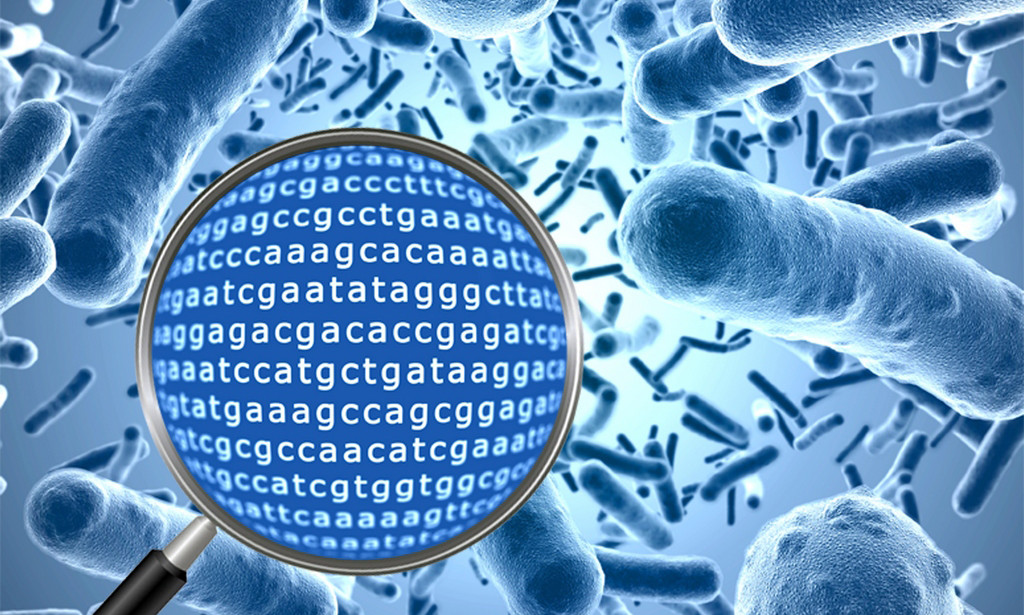
In the sprawling, unseen universe that is the microbiome, an eclectic cast of microorganisms plays critical roles—from regulating our health to maintaining Earth's vital ecosystems. Deciphering the genetic material of these organisms is akin to cracking the biological code of life's microcosm. Within this complex and interwoven tapestry, a burgeoning field emerges where computational science meets biology: bioinformatics, the beating heart of modern metagenomics.
Metagenomics, a term that suffuses the corridors of contemporary biological research, refers to the direct analysis of genomic sequences from environmental samples, bypassing the need for cultivating lab samples. The insights gleaned from metagenomic studies can revolutionize our understanding of microbial activities and open doors to groundbreaking applications in medicine, agriculture, environmental science, and beyond.
Unveiling Microbial Diversity with Bioinformatic Tools
Imagine attempting to read a book, but you're handed millions of fragmented sentences, some overlapping, others staggeringly unique, yet all are a part of diverse chapters that make up the story of our planet’s microbial life. Bioinformatics offers a set of sophisticated computational tools that enable scientists to assemble these pieces, infer functions, and understand complex microbial interactions.
Crucial to this mission are bioinformatics pipelines that seamlessly integrate various software and algorithms to handle massive datasets produced by high-throughput sequencing technologies. From preprocessing raw data to the assembly, annotation, and analysis of the genetic information, bioinformatic workflows are meticulously designed to extract meaning from the metagenomic chaos.
(We will look at these softwares and algorithms in my next posts inorder to understand how they break they help to crack the code of life)
Data Handling: The Initial Hurdle of Metagenomic Analysis
High-throughput sequencing technologies have decreased the cost and time involved in sequencing while simultaneously producing an exponential increase in data volume. Managing and storing such data requires robust databases and storage systems. Bioinformatics balances these demands with solutions such as cloud computing with platforms like Amazon Web Services and tools like Hadoop that enable distributed computing over large clusters.
DNA Assembly: The Bioinformatics Construction Site
Once the data handling is under control, the next step is assembling short DNA reads into longer, coherent sequences—a process known as de novo assembly. Programs like MEGAHIT or MetaSPAdes use complex algorithms to piece together these reads, resembling a construction project where the blueprint is unknown, and the building blocks are not only numerous but molecularly minute (Li et al., 2015; Nurk et al., 2017).
Gene Prediction and Annotation: Attributing Meaning to Sequences
Having built our genetic "building,” bioinformatics takes the next step to interpret the structure. Gene prediction tools such as Prodigal scan the assembly to predict where genes are located (Hyatt et al., 2010). Annotation brings these genes to life, attributing identities and possible functions to them by comparing against reference databases like GenBank, using tools like BLAST, which highlight sequence similarities.
Metagenomic Binning: Sorting the Genetic Puzzle Pieces
A notable challenge in metagenomics is separating and assigning sequence data to the appropriate organisms or 'bins’. Sophisticated bioinformatics techniques categorize these sequences based on various characteristics like GC content or tetranucleotide frequency. This meticulous sorting process enables us to reconstruct partial to near-complete genomes from the environment, providing a glimpse into the genomic makeup of biodiversity.
Understanding Functionality: The Omics Ladder
Metagenomics doesn't stop at who is present; it seeks to understand what these microorganisms do. Here, we climb the omics ladder, with transcriptomics, proteomics, and metabolomics following suit. Bioinformatics enables the mapping of DNA sequences to functional proteins and metabolic pathways, constructing a multifaceted view of microbial communities in their natural environment.
Ecological Insights and Human Health: Real-life Applications
The applied importance of metagenomics, powered by bioinformatics, spans various sectors. In ecology, it informs conservation strategies and bioremediation efforts. In agriculture, it aids in enhancing soil health and crop productivity. In human health, metagenomics unearths insights into disease pathogenesis and helps tailor probiotics for gut health.
The Bioinformatics Bottleneck and Future Prospects
Despite the leaps made, bioinformatics faces challenges, such as the need for more efficient algorithms, improved databases, and standardized protocols to ensure reproducibility. However, the field is rapidly advancing, with machine learning and artificial intelligence increasingly becoming part of the bioinformatician's toolkit, promising to further accelerate discoveries.
Bringing it Full Circle
Bioinformatics is the key that has unlocked the monumental potential of metagenomics. These digital detectives are not only illuminating the convoluted genetic cosmos of microbial communities but are also empowering us to harness this knowledge for the betterment of humanity. As we continue to crack the code of life’s microcosm, it is the synergy of bioinformatics and metagenomics that will keep the narrative of discovery vibrant and ever-evolving.
Metagenomics, a field entranced by the enigmatic realm of the microscopic world, has been made possible by significant technological advances. This scientific odyssey began with the need to understand the role that invisible microbial communities play across various ecosystems and their direct impact on our health, environment, and the planet’s sustainability. Carving paths through this wilderness, bioinformatics technologies serve as the lanterns and maps that guide researchers through what we once referred to as "microbial dark matter."
The Dawn of Bioinformatics in Metagenomics
To appreciate the synergy between bioinformatics and metagenomics, it’s pertinent to look back at the revolution instigated by the Human Genome Project (International Human Genome Sequencing Consortium, 2004). The ambitious task of sequencing the human genome laid the groundwork for handling and interpreting vast quantities of genetic data. This endeavor catalyzed the growth of bioinformatics, primeval yet fast-growing, which later became pivotal in the realm of metagenomics.
The Deluge of Data: Sequencing and Beyond
The era of next-generation sequencing (NGS) technologies followed, with platforms like Illumina and PacBio reshaping the landscape of genomic research by providing deeper insights and higher resolution into microbial communities at an unprecedented scale. The data produced, however, was both a blessing and a conundrum, flooding scientists with more information than traditional computational methods could manage. Responding to this challenge, bioinformatics swiftly evolved to offer solutions such as novel algorithms for error correction, data compression, and optimized storage (Langmead et al., 2009).
Reconstructing Microbial Genomes: The Bioinformatics Toolkit
De novo sequence assembly, an intricate bioinformatic task, involves algorithmic solutions to construct genomes from short sequencing reads. Tools like SOAPdenovo, Ray Meta, and Velvet laid the foundation for this process (Luo et al., 2012; Boisvert et al., 2012). As the algorithms progressed, they became more proficient at handling the complex, repetitive features inherent in metagenomic data.
Gene prediction and annotation are where the assembled sequences begin to reveal their hidden secrets. Tools that excel in this space, like Glimmer and GeneMark, operate by harnessing traits specific to microbial DNA, enabling them to predict genes with noteworthy accuracy (Delcher et al., 2007). Other software, like the RAST server, provides comprehensive annotation by aligning predicted gene sequences against vast databases, giving clues to their functions (Aziz et al., 2008).
Biodiversity through Bioinformatics: Ecological and Environmental Implications
The advent of barcoding genes like the 16S rRNA in bacteria and archaea has simplified the discrimination and classification of microbial species within environmental samples. This simplicity anchors on the application of bioinformatics pipelines capable of OTU (operational taxonomic unit) picking, sequence alignment, and phylogenetic analysis, facilitating the estimation of species richness and evenness within communities (Cole et al., 2009).
Functional metagenomics reaches beyond mere identification, leveraging bioinformatics to connect genes to metabolic networks and ecological roles. Software such as KEGG (Kyoto Encyclopedia of Genes and Genomes) allows for the interpretation of these genetic circuits, enhancing our ability to predict how microbial communities contribute to nutrient cycling, pollutant degradation, or the synthesis of bioactive compounds (Kanehisa et al., 2004).
Bridging Biology and Informatics: Challenges and Innovations
Bioinformatics is no panacea; challenges such as the vast diversity of microbial life, incomplete reference databases, and horizontal gene transfer complicate data processing and interpretation. Efforts to refine metagenomic binning have led to tools like CONCOCT and MetaBAT, which strive to resolve the puzzle of partitioning community DNA into genomes more accurately (Alneberg et al., 2014; Kang et al., 2015).
Furthermore, assembly algorithms continue to evolve, with an emphasis on handling long-read sequencing data provided by third-generation sequencing technologies such as Oxford Nanopore and Pacific Biosciences. These long reads are a boon for bioinformatics, allowing more straightforward assembly and resolution of complex genomic regions.
Bioinformatics in Metagenomics: Trailblazing Future Discoveries
Looking toward the horizon, the integration of bioinformatics and metagenomics is set to ignite a proliferation of discoveries. The thirst for resolution has led to the development of single-cell genomics, which seeks to dissect the genomic composition at an individual cell level (Stepanauskas, 2012). Coupled with bioinformatics, this technique can reveal how individual microbial species within a community interact and adapt to their environment.
Metatranscriptomics and metaproteomics are the next steps in understanding the functional state of microbial communities. Here, bioinformatics play a pivotal role in analyzing RNA and protein data to unravel the expression patterns and cellular machinery of these microbial consortia. The outcomes often yield new enzymatic functions, inform biotechnology, and can even guide clinical diagnostics and therapies.
Towards a Data-Driven Exploration of Microbial Worlds
The synergy between bioinformatics and metagenomics epitomizes a new paradigm in biological research, one rooted in data-intensive exploration. This partnership paves the way for innovative pursuits such as the Earth Microbiome Project, which aims to construct a global catalogue of microbial function and diversity, and the Human Microbiome Project, designed to elucidate the complex microbial ecosystems associated with human health and disease (Gilbert et al., 2010; Turnbaugh et al., 2007).
Embarking on the Bioinformatics Journey: Final Thoughts
In conclusion, bioinformatics is not a mere adjunct to metagenomics; it is the lifeblood coursing through the veins of this revolutionary approach to exploring microbial life. It is a discipline that continues to evolve, propelled by the relentless march of technology and the insatiable curiosity of scientists seeking to understand the microbial dimension. As we further illuminate the microbial dark matter with every passing day, we are reminded that within the deepest reaches of the genetic code lies a universe of possibilities, and bioinformatics is our key to unlocking them.

You must be logged in to post a comment.